Article: Bogotá, through a maker's eye: my insider guide to where to go, eat, shop and stay
Bogotá, through a maker's eye: my insider guide to where to go, eat, shop and stay
Sharon Costi, the Venezuelan-born co-founder of London homeware brand CasaLatina, has loved Bogotá for 27 years and returns at least once a year to work with the Colombian artisans behind the brand.
Her essential Bogotá: the Museo del Oro and Museo Botero in La Candelaria, dinner at El Chato in Zona G, design shopping on Calle de los Anticuarios, the weekend flea market in Usaquén and a day trip to Laguna de Guatavita.

Why I see Bogotá differently
All CasaLatina designs are handmade by a team of over 60 artisans across nine communities in Colombia and my native Venezuela, reinterpreting ancestral techniques through an essential yet richly textural eye. I have a full team based in the city managing production, and I return to Bogotá at least once a year.
So when I walk through Bogotá, I notice the hands behind things. A carved door, a woven bag at a market stall, the clay dish my dinner arrives in. Below, after each stop, I've added a short note on what my eye goes to.


Usaquén Flea Market, Calle 119 con Carrera 6A, Usaquén, Bogotá
Street and flea markets abound in Bogotá, and Costi's favorite one turns "the neighborhood into one of the city's happiest weekend rituals".
La Candelaria: museums, colour and Monserrate at sunset

La Candelaria is my favourite part of Bogotá. It is the old historic quarter: colonial houses painted in every colour, steep streets, bold street art, and old buildings that now hold galleries, shops and restaurants. Three cultural stops sit within an easy walk of each other.
- Museo del Oro (Carrera 6 #15-88) is the best introduction to pre-Columbian Colombia I know. banrepcultural.org/bogota/museo-del-oro,
- Museo Botero (Calle 11 #4-41) sets Fernando Botero's generous figures inside a beautiful colonial house with a peaceful courtyard. banrepcultural.org/bogota/museo-botero,
- Escuela de Artes y Oficios Santo Domingo (Calle 10 #8-73) is a school where students learn woodwork, leatherwork, weaving and embroidery. You can watch craft being passed on in real time. eaosd.org,
Wander on and you reach the grand Plaza de Bolívar. I like to finish the day with the cable car up Monserrate for sunset over the city.


Escuela de Artes y Oficios Santo Domingo, La Candelaria, Bogotá
Ph. Escuela de Artes y Oficios, Bogotá
Zona G: dinner at El Chato

Bogotá is one of Latin America's most exciting cities to eat in, and Zona G is its gastronomic heart. My pick is El Chato (Calle 65 #4-76), where chef Álvaro Clavijo turns Colombian ingredients into something inventive and modern. It was named Latin America's best restaurant in 2025. The menu follows the seasons, but if there is anything with palmito, heart of palm, I'm ordering it.

Calle de los Anticuarios: Bogotá's design street
Calle de los Anticuarios, Calle 79B, Chapinero. Verdi, verdi.com.co. Calle 79B #8-40. Suki Cohen, sukicohen.com. Cra. 12a #77 - 22. Touché, touche.com.co, various locations. Agua Bendita, aguabendita.com.co, various locations. Onda de Mar, ondademar.co, various locations
Calle de los Anticuarios is Bogotá's unofficial design district: a leafy, 250-metre street packed with fashion, interiors, art and independent Colombian brands. My favourite stop is Verdi, whose exquisite rugs, tapestries, cushions and mochilas are handcrafted using fique and metallic thread. Bogotá is also brilliant for swimwear and lingerie — Suki Cohen, Touché, Agua Bendita, and Onda de Mar are perennial favourites.


The maker's eye. Fique is a native plant fibre, worked by hand in Colombia for generations, much like the iraca palm our weavers use in Usiacurí. When you touch a natural-fibre piece, run your fingers along the edge. A good weaver finishes the border as carefully as the centre.
Usaquén flea market and a night at Andrés Carne de Res
For something gentle, go to the weekend flea market in Usaquén (Calle 119 with Carrera 6A). Artisan stalls, street food and live music make it one of the city's happiest weekend rituals.
The maker's eye: how I tell handmade from souvenir. Ask who made the piece and where; a real maker will tell you the town. Look for small irregularities, a brushstroke that thickens, a weave that shifts slightly in colour, because machines don't do that. And feel the weight. Handmade clay and hand-carved wood are heavier and more solid than they look.

For pure, unfiltered fun, spend a Friday night at Andrés Carne de Res in Chía (Calle 3 #11A-56). It starts as a huge steak restaurant and somehow turns into a theatrical party, with music and dancing everywhere.
The maker's eye: how I tell handmade from souvenir. Ask who made the piece and where; a real maker will tell you the town. Look for small irregularities, a brushstroke that thickens, a weave that shifts slightly in colour, because machines don't do that. And feel the weight. Handmade clay and hand-carved wood are heavier and more solid than they look.
One More (Lesser Known) Thing to Note
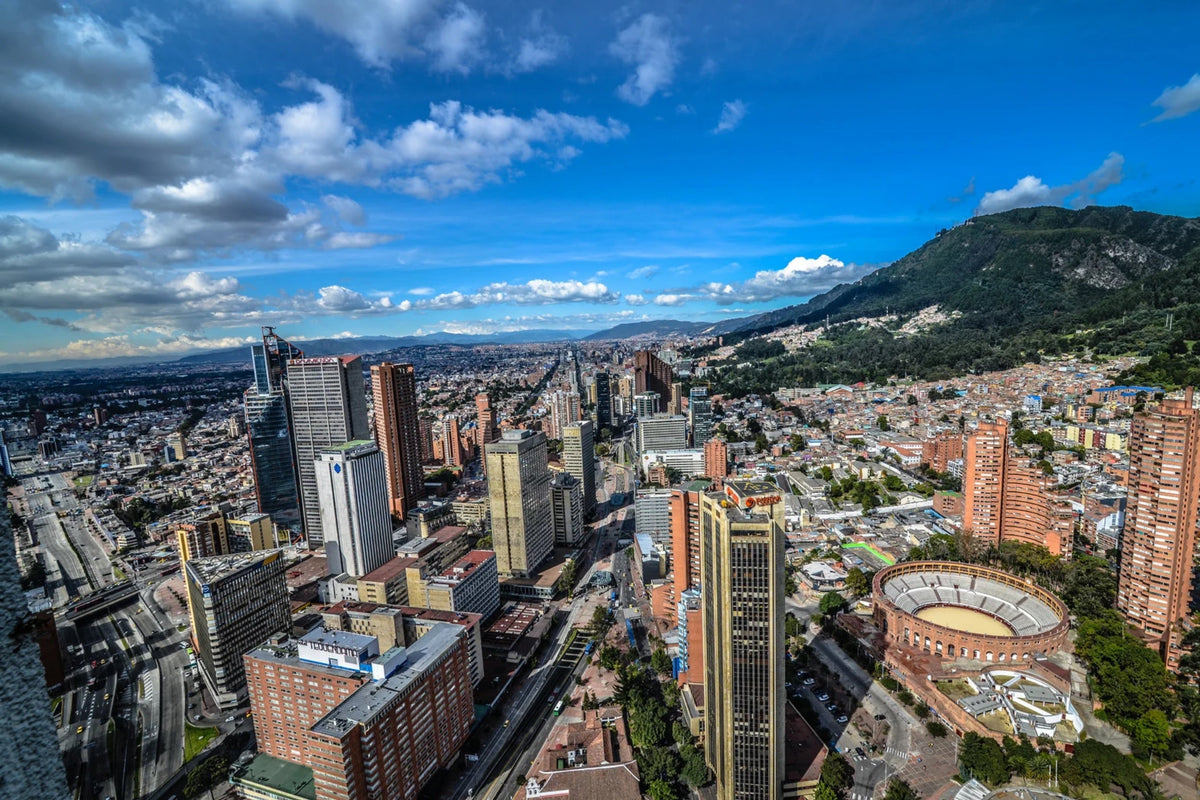
Despite its size and apparent chaos, Bogotá is surprisingly easy to navigate. Much of the city follows a numbered grid: Calles run roughly east-west and increase as you head north, while Carreras run north — south and increase as you move west. An address often tells you almost exactly where you are — and the Andes provide a built-in compass, always rising to the east. One other surprise: Bogotá may be in the tropics, but it sits more than 2,600 meters above sea level, so the climate is cool year-round. Pack a jacket."
Where to stay

This vibrant and modern 5-star hotel is located in the heart of Bogotá, Colombia, just 8.2 km from the city center has become one of the favorite hotels for the stylish tribe.
DON'T MISS: Climb to Apache Rooftop Bar, where a wooden, open-air perch delivers a full 360-degree panorama of Bogotá and its green eastern mountains. With a menu inspired by comic books, a 1950s diner mood of high stools and slouchy leather sofas, and much-praised burgers alongside inventive cocktails, it is the perfect prelude to a night of live music and a DJ-led party crowd on Fridays.
What are the best things to do in Bogotá?
CasaLatina co-founder Sharon Costi recommends La Candelaria's Museo del Oro, Museo Botero and Escuela de Artes y Oficios Santo Domingo, sunset at Monserrate, dinner at El Chato in Zona G, the Usaquén weekend flea market and a day trip to Laguna de Guatavita.
Where can I buy authentic Colombian crafts in Bogotá?
Try Calle de los Anticuarios in Chapinero, especially Verdi for fique rugs and mochilas, the weekend flea market in Usaquén, and Expoartesanías at Corferias each December. Ask the seller which town a piece comes from; real makers always know.
When is Expoartesanías 2026?
Expoartesanías 2026 runs from 7 to 20 December at Corferias in Bogotá. It is Latin America's most important crafts fair and the place where CasaLatina began in 2021.
What is La Chamba pottery?
La Chamba pottery is handmade black clay cookware from the village of La Chamba, on the Magdalena River in Tolima, Colombia. The tradition traces back at least 700 years, and the pieces go from oven to table.
Where can I buy handmade Colombian tableware in the UK?
CasaLatina, a London-based brand, sells handmade tableware from more than 60 artisans in nine communities in Colombia and Venezuela, including La Chamba black clay, hand-painted Carmen de Viboral ceramics and iraca palm placemats from Usiacurí. It ships internationally from casalatina.co.uk.